In this issue

A birdy.bike special issue

NO. 001 / 2026

The story of

Birdy: the history of a folding bike

Small wheels, no compromise.

In 1995, an idea from a German garage became the world's first full-suspension folding bike. It had no frame hinge, yet folded small enough for a car boot. Its wheels were just 18 inches, yet it was built to go the distance.

This is the story of Birdy: thirty years of folding, suspension and stubbornness.

First ride
1995
Sold by 2010
100,000+
Generations
03
01 ORIGIN

Darmstadt, Germany · 1992

It began with two old bikes,
and grew into a new species.

The Birdy story did not start in a factory. It started in a garage at Markus Riese's parents' house.

In 1992, Markus Riese had the basic idea for Birdy. The first prototype was not a CAD drawing or a precision sample. It was quickly welded together from two old bicycles.

A year later, he and Heiko Müller built a proper aluminium prototype and won the Hessian Innovation Prize. The bike was shown at Intercycle in Cologne and Eurobike in Friedrichshafen, where it caused a stir. By late 1995, the first Birdy bikes were on sale: the first production full-suspension folding bike.

2old bikes,
welded into the first prototype
1year later,
the aluminium prototype wins an award
1995The first bikes
go on sale
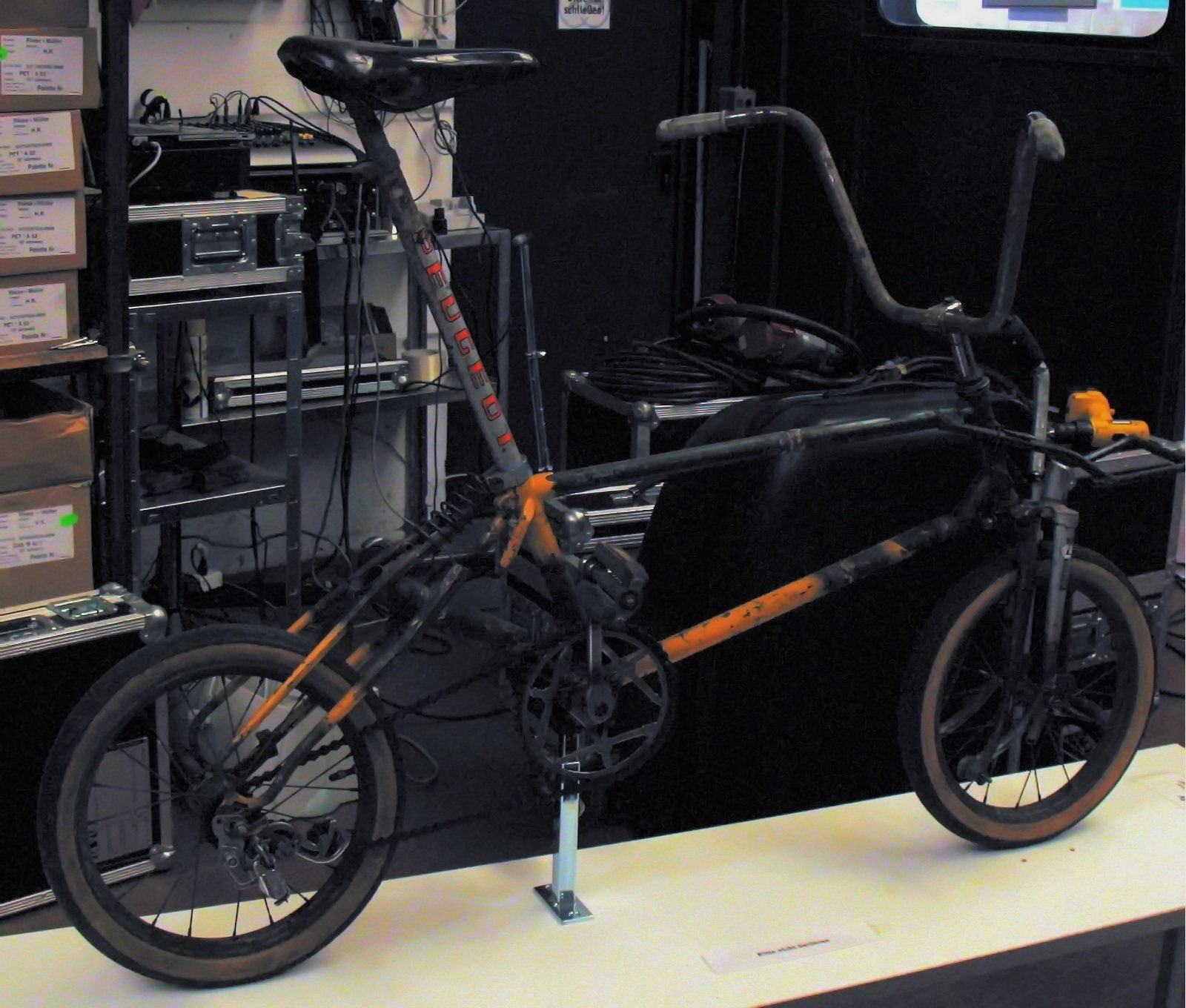
ARCHIVE OBJECT / 001 1995
One of the first 1995 Birdy prototypes, displayed in a museum glass case
One of the first Birdy bikes, designed in 1995. Photo: Anon6543 / CC BY-SA 4.0
DESIGN PREMISE

Fold the bike smaller.
Do not fold away the ride.

02 TIMELINE

From a garage to a global cult

From a garage
to the world.

In three decades, Birdy has gone through only three major frame generations, but many small revisions, special editions and one rather unusual industry story.

30+ YEARS OF
ITERATION
  1. 1992
    THE IDEA

    An idea in the garage

    Markus Riese had the basic idea for Birdy. The first prototypes were welded together from two old bikes in his parents' garage.

  2. 1995
    LAUNCH

    The world's first full-suspension folder

    Markus Riese and Heiko Müller's aluminium prototype won the Hessian Innovation Prize and drew attention at Intercycle and Eurobike. The first bikes went on sale at the end of the year as a luxury folder, often priced above US$1,000.

  3. 1996–97
    CURIOSITY

    The blue Jeep Renegade detour

    A batch of blue frames reached the United States, where they were built up with lower-spec six-speed components and briefly sold under the Jeep Renegade name. It remains one of the strangest chapters in Birdy's early history.

  4. 2003
    TOURING

    The missing piece for touring

    The frame pivots required by the Expedition Carrier rack became standard equipment, giving the Birdy a better claim to loaded touring.

  5. 2006
    GENERATION 2

    Mk2: a lighter monocoque frame

    The new monocoque frame was lighter and supported the seatpost better, while the front suspension linkage and component choices were updated too. By 2013, the standard Mk2 weighed 10.8 kg.

  6. 2000s
    SIDE STORY

    Frog: the mini Birdy that missed its moment

    The smaller Frog was withdrawn after weak sales, then returned briefly in 2010. Today it is a collector's item.

  7. 2010
    MILESTONE

    Past 100,000 bikes

    According to the Wikipedia article, more than 100,000 Birdys had been sold by 2010. A niche folder had become a cross-market cultural icon.

  8. 2013
    PERFORMANCE

    Birdy Race: a folder built for speed

    Drop handlebars, a Shimano 20-speed drivetrain and a 10.9 kg build. The Birdy Race pushed the small-wheel platform in a sportier direction.

  9. 2015
    GENERATION 3

    Mk3: the fold, redesigned

    Launched in July 2015. The frame looked like the Mk2, but the folded package was smaller, the bike lighter, and the fork and components were redesigned. The range was reduced to four models, and chain tension while folded was improved.

  10. 2020
    HOMAGE

    Birdy Classic looks back

    The Birdy Classic arrived with the Mk1 frame silhouette. The original did not disappear; it simply returned in another form.

  11. 2025–26
    TRANSITION

    R&M steps back, Pacific Cycles carries on

    Riese & Müller announced in 2025 that it would withdraw from Birdy marketing and sales to focus on e-bikes; the article records sales ending in 2026. Production continues in Taiwan with Pacific Cycles.

Timeline compiled from the Wikipedia article “Birdy (bicycle)” and its cited sources. Some entries cover a range of years; exact models, specifications and availability vary by market.

03 GENERATIONS

Three frames, one attitude

One soul,
three frames.

Mk1 1995—
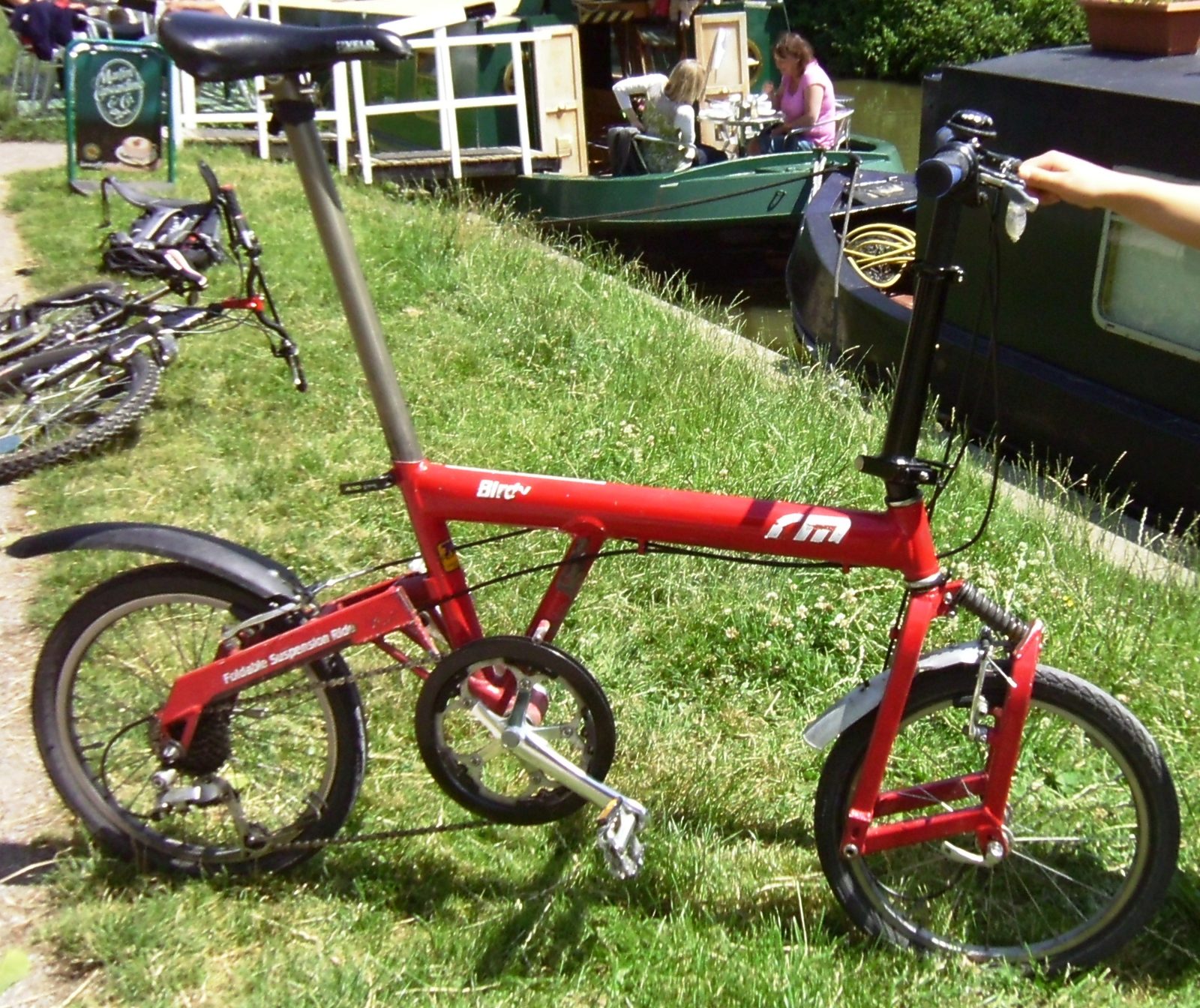
A red 2000 Mark 1 Birdy with a seven-speed rear derailleur, parked beside a canal
Mark 1 · 2000
THE ORIGINAL

Solve the hard part first.

The original production silhouette. A one-piece aluminium frame with no central hinge, where the suspension pivots doubled as folding latches. It proved that small wheels, full suspension and a fast fold could coexist.

Frame
One-piece aluminium
Gearing
6–14 speeds
Special edition
10th anniversary 20″ wheels
Mk2 2006—
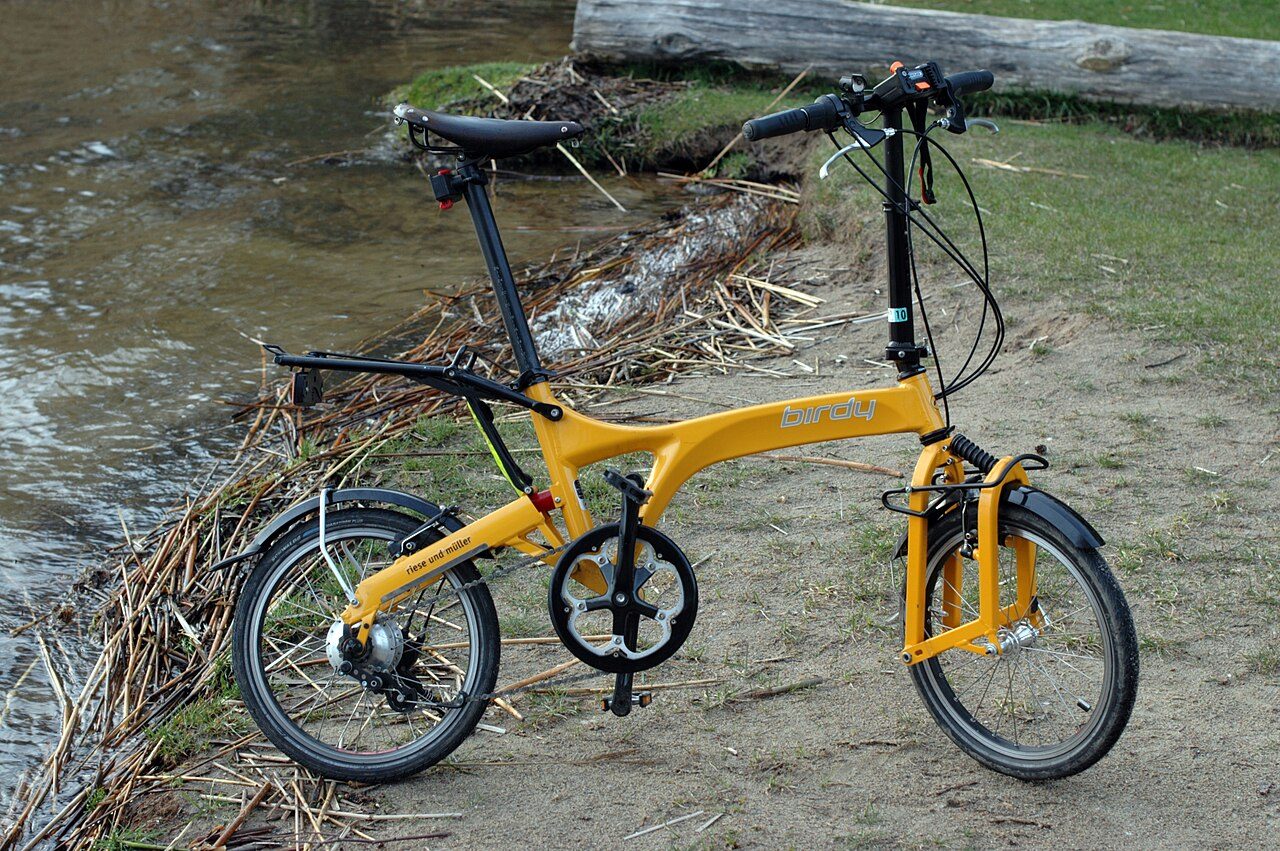
A yellow-orange 2011 Birdy Rohloff parked on a riverbank
Birdy Rohloff · 2011
THE REFINEMENT

More stiffness. More support.

A lighter monocoque frame, fuller seatpost support and a strengthened front suspension linkage. The Mk2 kept Birdy's ride character while correcting the early structure's weak points, one by one.

Frame
Monocoque
Standard weight
10.8 kg (2013)
Setup
Commuter to Rohloff 14-speed
Mk3 2015—
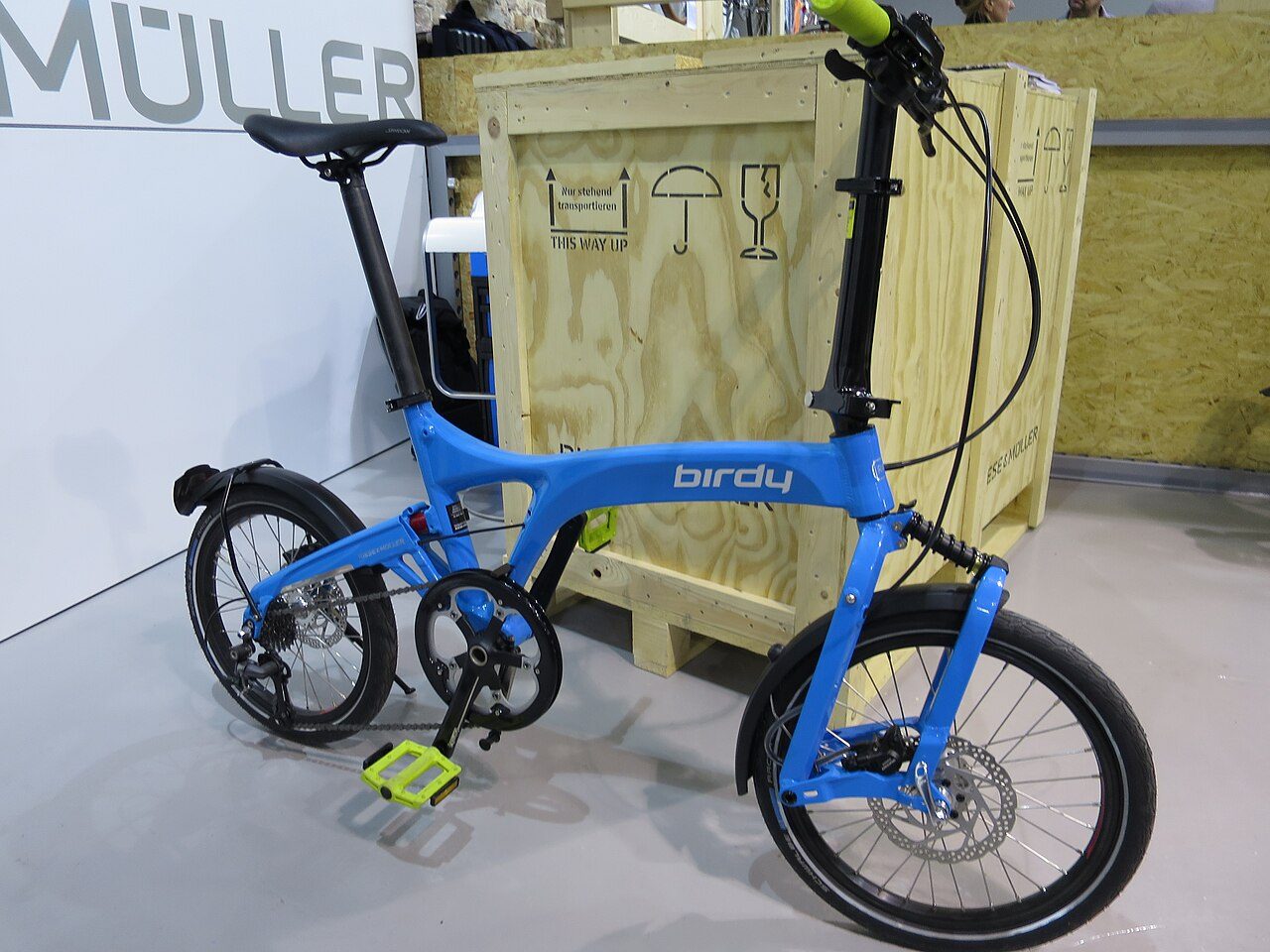
A blue Birdy Mk3 on display at the Berliner Fahrradschau in 2017
Birdy Mk3 · Berlin, 2017
THE MODERN ERA

Make the fold catch up with the ride.

It looked like an Mk2, but underneath it was a full rethink: a smaller folded package, a lighter bike, a redesigned fork and stronger components. The range was also simplified from a confusing sprawl to four models.

Launched
July 2015
Focus
Smaller, lighter, stronger
Range
Simplified to four models
OFF-SHOOTS & ODDITIES

Beyond the main line,
there are other names.

2000s

Frog

A smaller Birdy. Withdrawn after weak sales, briefly revived in 2010, and now a collector's item.

2013

Birdy Race

Drop bars, Shimano 20-speed gearing and 10.9 kg. A commuter tool turned into a speed machine.

2020

Birdy Classic

The Mk1 frame silhouette, rewritten with contemporary components.

04 ENGINEERING

The mechanics of a stubborn idea

A suspension system,
hidden in the fold.

What makes Birdy least like a folding bike is its refusal to cut the frame in half. The front and rear suspension are not just comfort equipment; they are the folding structure itself.

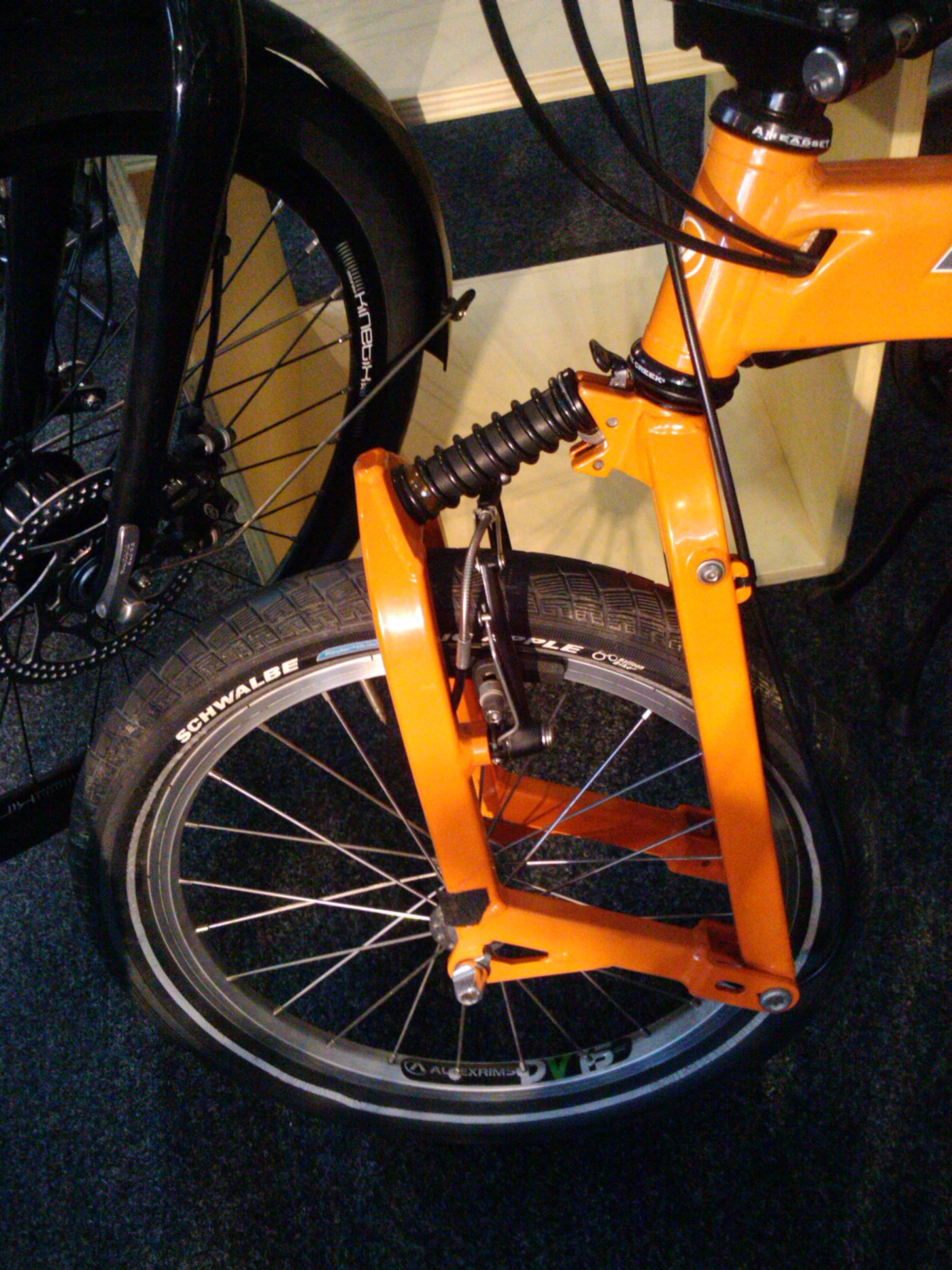
Close-up of the Birdy leading-link front suspension, showing the spring and linkage
WHEEL 18″ 355 mm ETRTO
Leading-link front suspension · detail Photo: AndrewDressel / CC BY-SA 3.0
01

Leading-arm front suspension

The fork uses a leading-link arm to create anti-dive behaviour, so pedalling is less likely to compress the suspension. It is Birdy's most recognisable piece of mechanical language.

02

Urethane rear suspension

The rear swingarm is suspended by a urethane bush, which can be swapped for a gas-filled unit. The whole mechanism sits under the frame and folds with the bike.

03

No central frame hinge

The main frame does not rely on a central folding hinge. The front and rear contact points double as latches and suspension pivots; the rider's weight keeps the frame together and makes pedalling feel direct.

04

Standard rear dropout spacing

Standard rear spacing from the early years opened up gearing, disc brakes and different drivetrain options. Factory choices have included 8-speed hub gears, the 24-speed SRAM DualDrive and the Rohloff 14-speed hub.

Folded size
35–39 × 58–61 × 76–79 cm
Production weight
10.2–12+ kg
Rear gearing
6–14 speeds
Wheel size
18 in / 355 mm

Specifications compiled from the Wikipedia article and its cited sources. Dimensions are the body ranges recorded in the article; actual figures vary by model, year and modifications.

05 THE FOLD

Four moves, one small package

Four moves.
City-sized.

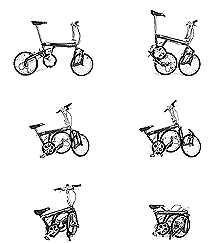
Birdy does not fold by halving the frame. It tucks the front and rear suspension under the main frame. There are more steps than a Brompton, but the result is a complete suspension structure and a stiff ride.

  1. 01

    Tuck the rear suspension

    The rear shock and swingarm fold up under the lower edge of the frame.

  2. 02

    Release the front suspension

    Unclip the front suspension and swing the leading arm and front wheel back under the frame.

  3. 03

    Drop the seatpost

    The long seatpost slides fully into the frame and becomes the main support of the folded package.

  4. 04

    Fold the handlebar

    Finally, hinge the handlebar down to complete the fold.

ARCHIVE LOOP / 001 108 × 81 PX
Animation showing how a Mark 1 Birdy folds

Folding a Mark 1 Birdy.
Original archive animation.

FIELD NOTE

If you only need to wheel the bike, the front wheel can stay unfolded, letting the folded Birdy roll through a station like luggage. The optional rack with rollers makes moving the package easier still.

06 DAILY LIFE

Commute · Tour · Train · Repeat

It folds.
It also goes.

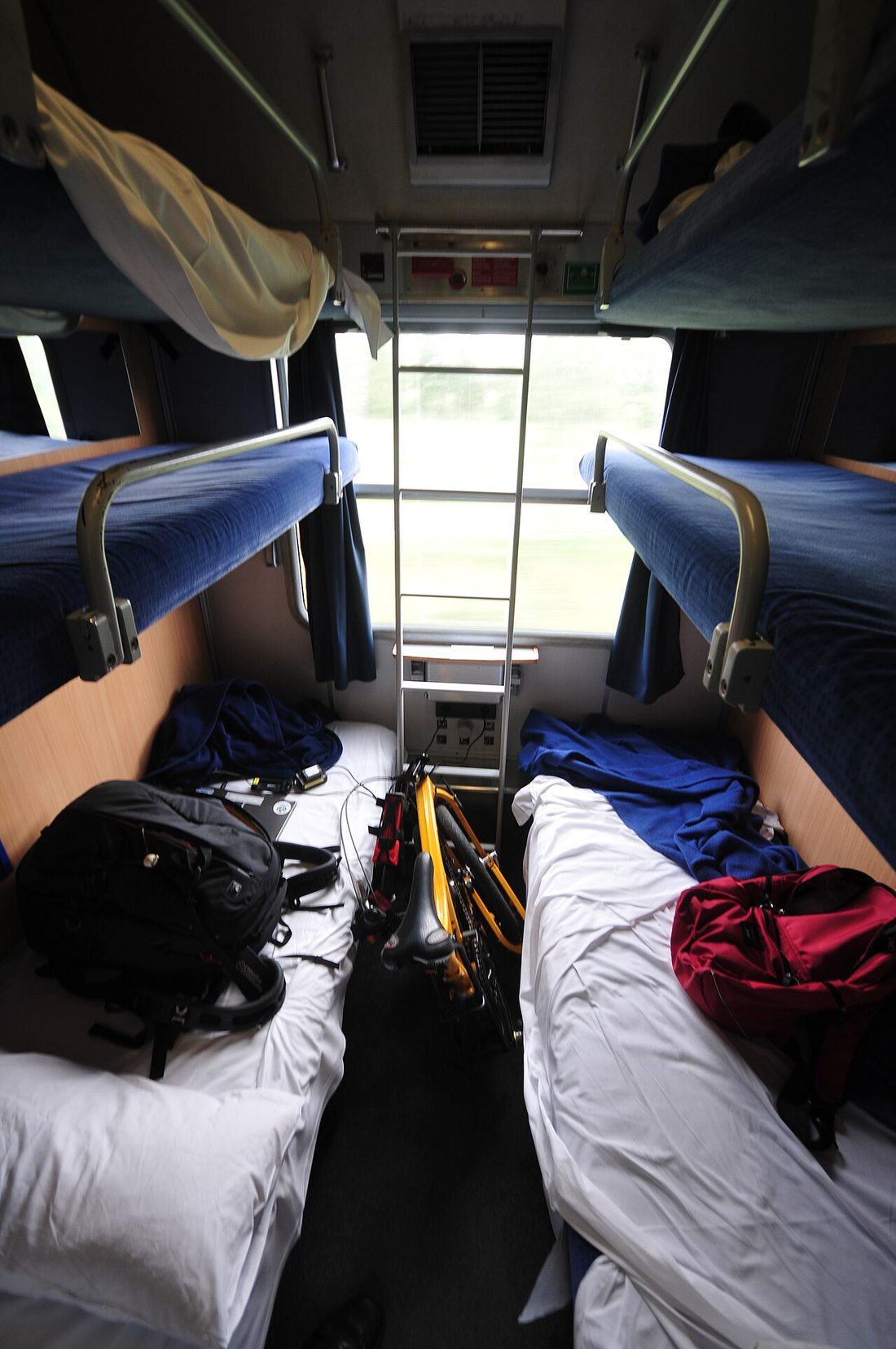
A folded Birdy stowed on a sleeper train berth
Folded, stowed, still rolling.
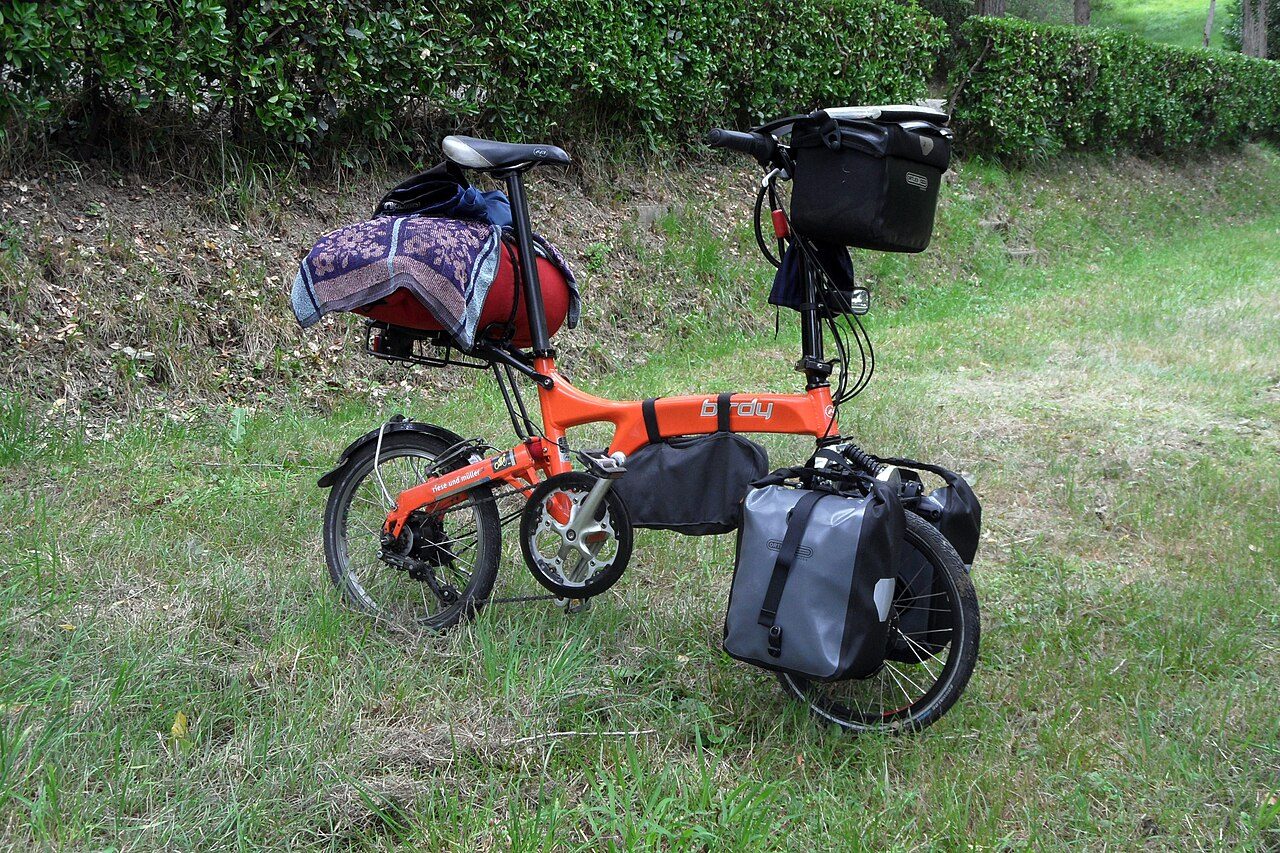
A Birdy loaded with panniers and a rack bag, parked on grass
Loaded for the long way home.

A small bike that folds, yet designed to ride far.

Wide gearing, a stiff frame and basic suspension make the Birdy more than a commuter. It can handle long-distance touring too. Some riders take it into offices, shops and trains; others fit racks and panniers and ride further afield.

That contradiction — small in the city, fast on the road — has built a distinctive Birdy community in Japan and across Asia, as well as loyal owners in the UK, Europe, the US and Australia. AtoB magazine praised the Mk2's speed and comfort while warning that missing a step makes the fold considerably more complicated.

  • 01Commute

    Take it into the office, a shop, a bus or a train.

  • 02Tour

    Racks and panniers support long rides; a dedicated case reduces disassembly.

  • 03Rail

    Roll it while folded for easy multi-modal travel.

  • 04Sport

    Seen in non-UCI races and fast group rides.

MARKETS & NAMES

Japan, Indonesia, Malaysia, Singapore, Taiwan and China are key markets. In Japan the bike has been sold as the Bianchi Fretta (OEM) and BD-1; custom parts come from names such as Colorplus and Ridea.

THE PRICE OF SMALL

Price was never Birdy's selling point. These are the historical price points recorded in the article.

US$1,500 Approximate US entry price
£939 2013 UK World Sport
US$4,500+ High-end titanium models
US$500–700 Typical used Mk1 range
07 OWNERSHIP

A beautiful compromise

It is not
a perfect bike.

People rarely love the Birdy because it has no flaws. They accept the flaws in exchange for a ride they cannot find anywhere else.

01

The price of a custom bike

Some high-end models cost as much as a bespoke bicycle. Even the used market is not cheap: Mk1 examples commonly trade between US$500 and US$700.

02

The 18-inch wheel question

The 355 mm ETRTO wheel size makes the folded package compact, but reduces the choice of rims, tubes and tyres. In the early years, decent 18-inch tyres were hard to find at all.

03

Proprietary parts add friction

Gears and brakes are mostly standard, but the rear rack, the spoon clip that holds the rear triangle and the front suspension bearings are not. Some owners substitute plastic mudguards for the originals.

04

Clever mechanisms need care

Early aluminium parts suffered stress fractures under heavy loads, and play in the old front linkage could amplify high-speed wander. The Mk2 and Mk3 improved this, but long seatposts and stems still deserve regular inspection.

Those compromises explain why the Birdy has always stayed niche — and always stayed distinctive.